
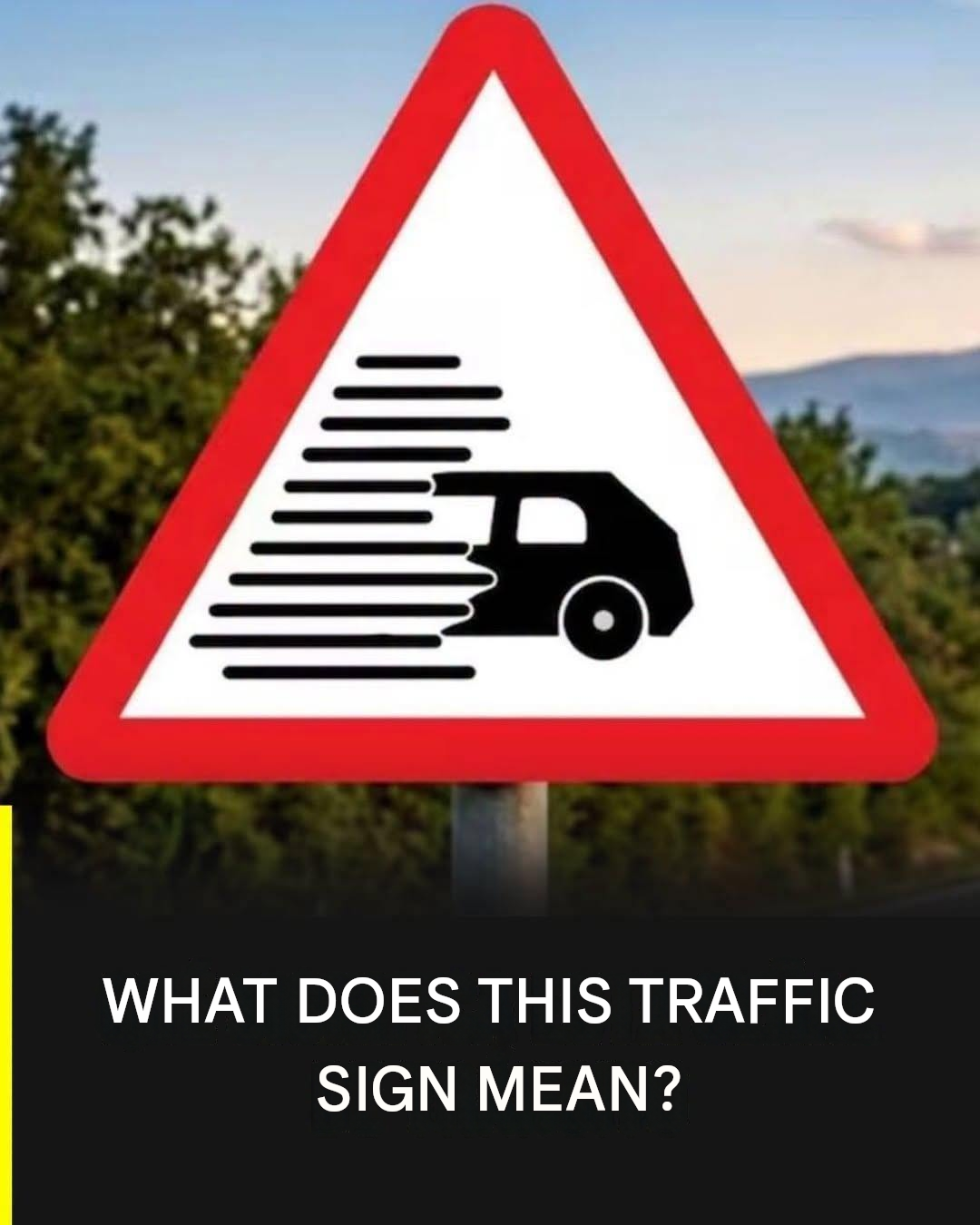
However, fog is not the only condition that may be associated with this warning. Reduced visibility can also result from smoke, dust, heavy rain, or certain environmental conditions. In some areas, airborne particles following a fire or sheets of water created during a storm can also make it difficult for drivers to see.
The importance of this type of sign lies in its ability to help drivers anticipate a problem. Its purpose is not necessarily to indicate that the danger is already present exactly where the sign stands, but rather to warn that conditions may change farther down the road.
For this reason, when drivers encounter this warning sign, they should treat it as a signal to adjust their driving behavior. The first step is to reduce speed gradually and adapt driving to the actual road conditions.
There is no single speed limit that is appropriate for every situation involving reduced visibility. A safe speed depends on several factors, including the density of the fog, road conditions, traffic, lighting, and how far ahead the driver can see. Therefore, numerical guidelines associated with specific national codes or recommendations should not be interpreted as a single universal international rule.
It is also important to increase the following distance from the vehicle ahead. When visibility decreases, the time available to react to sudden braking or an unexpected change in traffic conditions may also be reduced. Keeping a greater distance provides more room to respond safely.
Another essential consideration is the proper use of vehicle lights. In fog, heavy rain, or smoky conditions, low-beam headlights are generally more appropriate than high beams because high beams can create glare and make visibility even worse. Drivers should also follow local regulations regarding the use of fog lights when their vehicles are equipped with them.
Overtaking should also be avoided when visibility is limited. A maneuver that would normally be safe can become much more dangerous when drivers cannot see oncoming traffic or potential obstacles on the road clearly enough.

