
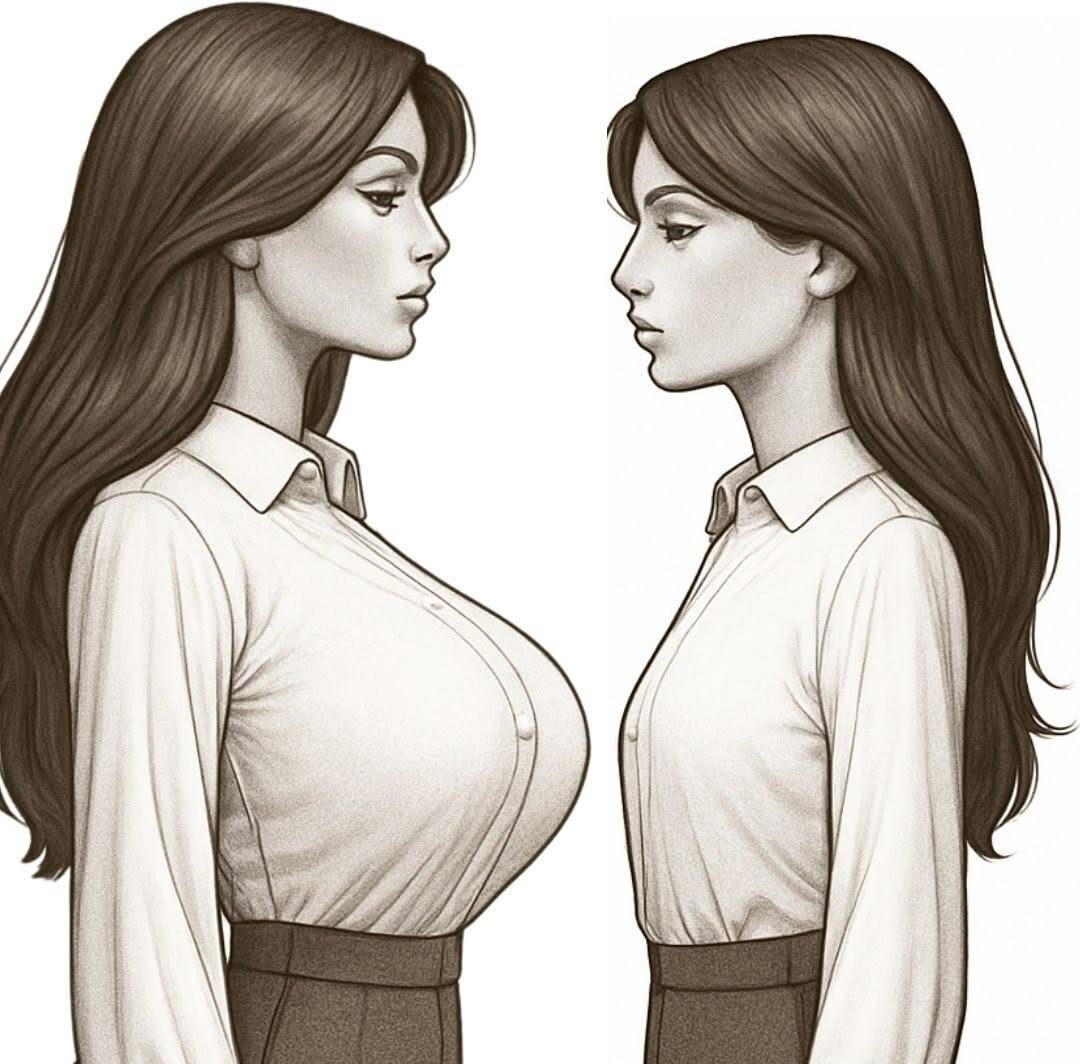
If someone experiences unusual breast changes, persistent pain, a new lump, or other concerning symptoms, they should consult a qualified healthcare professional regardless of breast size.
5. Self-Image, Well-Being, and Body Perception
Body image research suggests that women's feelings about their breast size can be influenced by personal experiences, social expectations, and cultural beauty standards.
Some women may appreciate the comfort they experience during physical activities or when choosing clothing, while others may have different preferences or concerns.
However, there is no reliable scientific basis for claiming that women with smaller breasts generally have higher self-esteem, are more comfortable with their bodies, or depend less on beauty standards.
Every woman's experience is individual, and body size does not determine personality or emotional well-being.
6. Beauty Standards: How They Change Over Time
Beauty ideals are not universal. Throughout history, preferences regarding the female body have varied across cultures and historical periods.
Having small breasts is a completely normal variation of the human body, influenced by genetics, hormones, and body composition. It does not define a woman's health, physical capabilities, femininity, or personal worth.
Understanding these factors helps move beyond myths and focus on what truly matters: health, well-being, and a positive relationship with one's own body.
The Bottom Line
Breast size alone cannot tell you whether a woman is healthier, more fertile, more sensitive, or hormonally different from another woman. Natural variations in breast size are common, and there is no single ideal size that defines health or beauty.

