
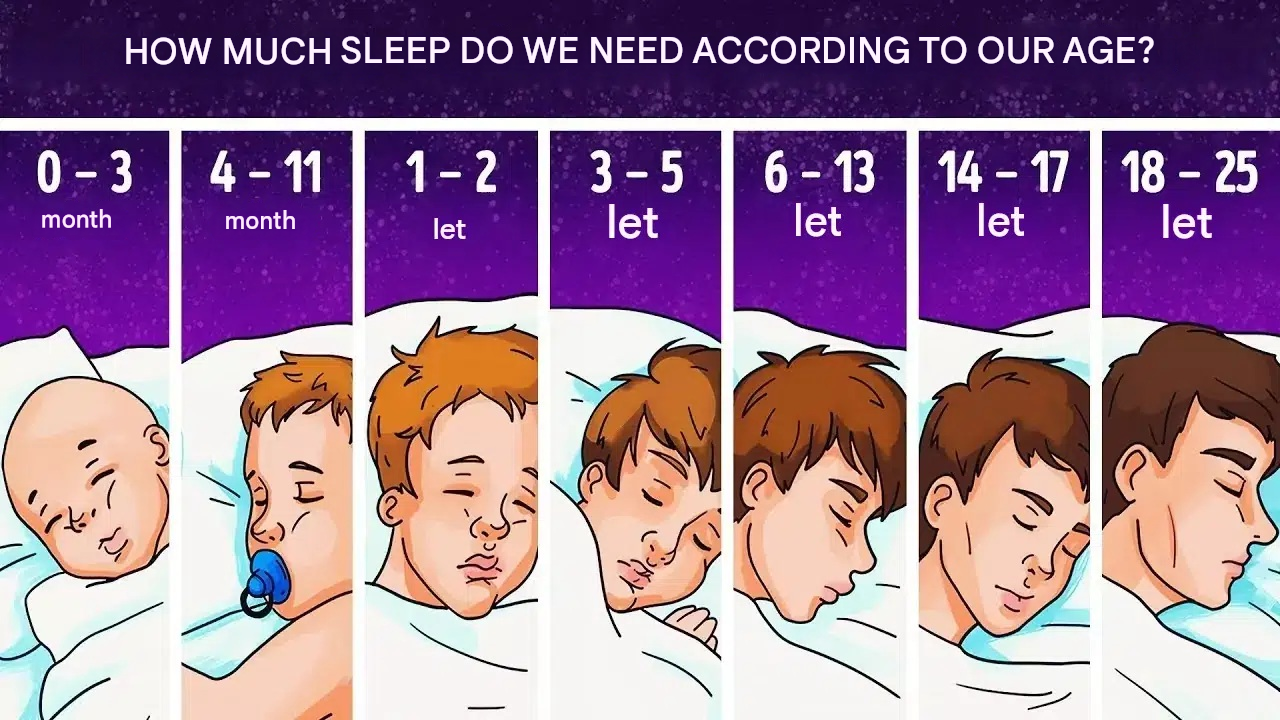
The need for sleep may change slightly with age. According to CDC recommendations, people aged 61 to 64 need approximately 7 to 9 hours of sleep, while people 65 and older need approximately 7 to 8 hours.
However, this does not mean that an older person automatically needs significantly less sleep.
Sleep patterns can also change with age. Some older adults fall asleep earlier, wake up earlier, or wake up more frequently during the night. However, if a person is significantly tired during the day, it may be appropriate to look for the underlying cause.
What Can Help Improve Sleep Quality?
Sometimes the problem is not simply that we go to bed too late. Simple changes to our daily routine can also help.
Go to bed and wake up at approximately the same time. A regular schedule can help the body establish a more stable sleep rhythm.
Reduce light and electronic device use in the evening. Phones, tablets, and computers can unnecessarily extend the amount of time we stay awake.
Get enough physical activity during the day. Regular physical activity supports overall fitness and may contribute to better sleep.
Pay attention to your bedroom environment. A dark, quiet, and comfortably cool room can create better conditions for rest.
Do not neglect stress. Tension and constant overthinking can make it difficult to fall asleep. A calm evening routine, reading, or a few minutes of relaxation may help.
It Is Not Only About How Many Hours You Sleep
Recommended values are useful guidelines, but every person is somewhat different.
Some people feel refreshed after 7 hours, while others need 8 or more hours. It is also important to pay attention to how you feel during the day.
If you regularly sleep for a sufficient amount of time but still wake up exhausted, frequently wake during the night, or experience long-term difficulty falling asleep, it may be appropriate to consult a doctor. The CDC also recommends seeking medical advice when persistent sleep problems occur.
What Should You Remember?
The need for sleep changes throughout life. Babies need many hours of sleep, children and teenagers need more than adults, and most adults should regularly get at least 7 hours of sleep per day.
However, it is not only about the number of hours. Sleep quality, regularity, and an appropriate daily routine are also important for healthy sleep.
So, if you often cut your sleep short because of work, your phone, or other obligations, it may be worth reconsidering your evening habits.
Sometimes, getting a few additional hours of quality sleep can be one of the simplest changes we can make for our health.
Note: The recommendations in this article are based on current CDC recommendations and guidance from professional sleep organizations; individual sleep needs may vary.

