
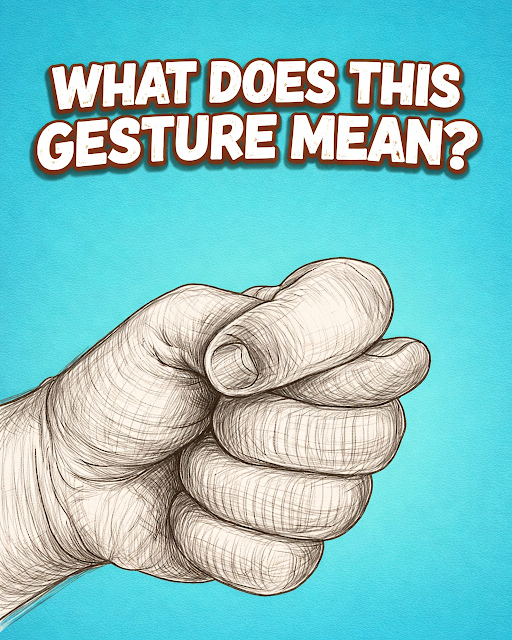
The Hidden Meaning Behind the “Fig” Hand Gesture and Its Journey Through History
Human communication goes far beyond words. Long before written language became widespread, people relied on gestures—subtle movements of the hands, face, and body—to express emotions, convey warnings, and communicate meaning. Among these gestures, some have traveled across centuries, carrying layers of symbolism that many people today barely recognize.
One such gesture is the “fig” hand gesture—a simple yet intriguing sign made by tucking the thumb between the index and middle fingers. At first glance, it may appear playful or even meaningless. Yet throughout history, this gesture has held powerful meanings ranging from protection and luck to insult and defiance.
So what exactly does this gesture represent? Why has it appeared in so many cultures? And how has its meaning evolved over time?
Let’s take a deeper look at the fascinating journey of the fig hand gesture.
What Is the “Fig” Hand Gesture?
The fig gesture is formed by closing your fist and placing your thumb between your index and middle fingers, so that the tip of the thumb protrudes slightly.
It’s simple to make, easy to recognize, and surprisingly expressive.
But what makes it truly remarkable is not its form—it’s its meaning.
Ancient Roots: A Gesture Older Than You Think
The origins of the fig gesture can be traced back thousands of years, particularly to the ancient Mediterranean world.
In ancient Rome, the gesture was known as “mano fico”, which translates to “fig hand.” The name itself is believed to be linked to the fig fruit, which symbolized fertility and life due to its shape and abundance of seeds.
However, the gesture carried meanings that went far beyond agriculture or symbolism.
Protection Against Evil
One of the most widespread uses of the fig gesture in ancient times was as a form of protection.
People believed that certain gestures could ward off evil spirits, curses, or what was commonly referred to as the “evil eye.” The fig gesture was thought to have protective power, especially when directed outward or carried as a charm.
In some cultures:

